

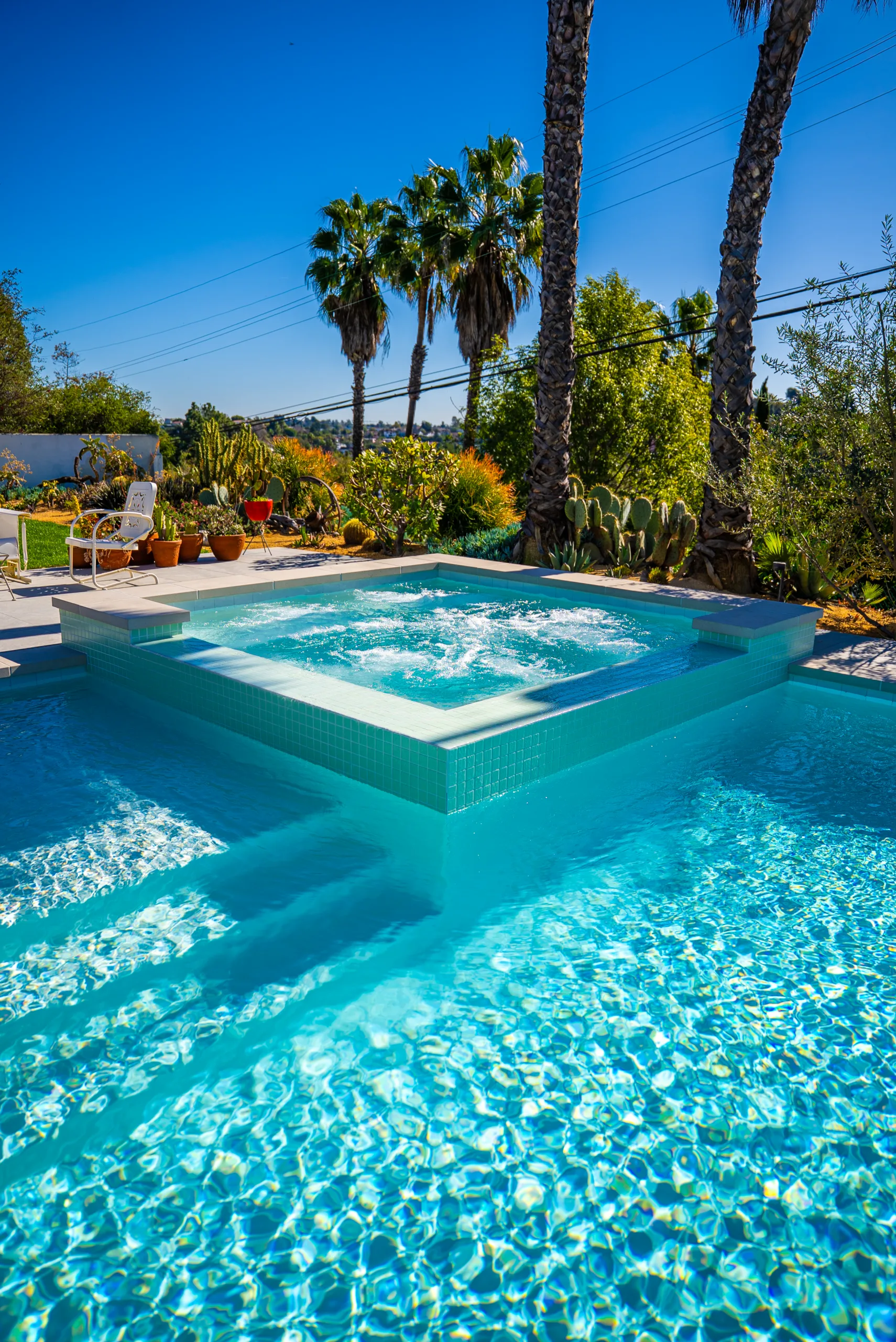
Over time, a pool’s surface can stain, crack, or degrade, diminishing its beauty and comfort. Y&M Brothers Design & Build provides expert pool resurfacing for Los Angeles homeowners, using high-quality materials to deliver a durable and beautiful result that revitalizes your entire backyard.
Los Angeles Pool Interior Finish Experts
The interior finish of your swimming pool is its most visible feature, defining its color, texture, and overall aesthetic. The plaster is also the waterproof barrier that protects the pool’s structure. A well-maintained surface is smooth to the touch and resistant to algae growth, making your pool easier to clean and more pleasant to use. When the plaster begins to show its age, it can become rough, stained, or hollow, creating an uninviting swimming environment.
At Y&M Brothers, we believe that a high-quality resurfacing job is an investment in the longevity and value of your pool. We use proven techniques and superior materials to make certain that your new pool surface is not only visually appealing but also resilient. Our experience in the Los Angeles area means we understand how to select and apply finishes that can withstand the demands of the Southern California climate.
Our Pool Replastering Process
We have developed a systematic process for pool replastering that makes certain a consistent, high-quality outcome for every project.
Initial Assessment
We start by evaluating the condition of your current pool surface, inspecting for cracks, stains, and deterioration to determine the best approach.
Surface Preparation
We carefully chip away the old, damaged plaster, clean the underlying shell, and apply a bond coat to create a strong foundation for the new finish.
Material Selection
We help you choose the perfect interior finish for your pool. As certified installers of PebbleTec, we offer a wide range of options, including classic plaster, durable pebble and quartz aggregate finishes, and sparkling glass bead finishes.
Application of the New Finish
Our skilled plastering crew applies the new interior finish by hand, troweling the material to create a uniform, smooth surface across the entire pool.
Initial Fill and Water Balancing
Once the new plaster has cured, we begin filling the pool and guide you through the critical initial water balancing process to protect the new finish.
Signs It’s Time to Resurface Your Pool
Common indicators that your pool may need replastering include:
- Visible Stains: Mineral stains, rust spots, or discoloration that cannot be removed with regular cleaning.
- Rough Texture: A surface that feels like sandpaper, a condition known as “etching.”
- Cracks or Flaking: Small cracks or areas where the plaster is peeling away, known as “spalling.”
- Water Loss: A sudden need to add water more frequently could indicate a leak through a crack in the plaster.
Pool Surface Materials
The material you select for your pool’s interior finish will affect its appearance, durability, and maintenance requirements.
Traditional Plaster
Traditional white plaster is the most affordable option and has been used for decades. It provides a smooth, classic finish and typically lasts 7-10 years with proper care. White plaster creates a bright, light blue water color that many homeowners find appealing. However, it is more susceptible to staining and etching than other finishes.
Quartz Finishes
Quartz finishes incorporate crushed quartz into the plaster, creating a more durable and stain-resistant surface. The quartz adds a subtle sparkle to the finish and comes in a variety of colors. Quartz finishes typically last 10-15 years and are more resistant to chemical imbalances in the water. They offer a good balance between cost and durability.
Pebble Finishes
Pebble finishes are the most durable option available. These finishes use small, smooth pebbles embedded in a cement matrix to create a natural, textured surface. Pebble finishes are extremely resistant to staining, etching, and algae growth. They come in a wide range of colors and can last 15-20 years or more. The textured surface provides excellent traction, making them a safe choice for pool decks and steps. The natural look of a pebble finish complements outdoor environments beautifully.
Glass Bead Finishes
Glass bead finishes incorporate tiny glass beads into the plaster, creating a shimmering, reflective surface that catches the light. These finishes are smooth, durable, and resistant to algae growth. They offer a luxurious, high-end appearance and come in a variety of colors.
Proper Water Chemistry
Maintaining proper water chemistry is crucial for extending the life of your pool’s interior finish. Imbalanced water can cause etching, staining, and premature deterioration of the plaster. The pH level of your pool water should be maintained between 7.2 and 7.8. Water that is too acidic (low pH) can etch the plaster, while water that is too alkaline (high pH) can cause scaling.
Total alkalinity acts as a buffer for pH and should be maintained between 80 and 120 ppm. Calcium hardness should be kept between 200 and 400 ppm. Water with low calcium hardness can leach calcium from the plaster, causing etching and weakening the surface. Regular testing and adjustment of your pool’s water chemistry will help protect your investment and keep your pool looking beautiful for years to come.
Preparing for a Pool Resurfacing Project
Before we begin a resurfacing project, there are a few things you should know. The pool will need to be drained completely, which means it will be out of service for about one to two weeks. We will coordinate with you to schedule the work at a time that is convenient for your family. Once the old plaster is removed, the underlying structure will be exposed. This is an excellent opportunity to address any structural issues, such as cracks in the gunite shell or leaks in the plumbing.
After the new finish is applied, the pool will need to be filled and the water chemistry carefully balanced. The first few weeks after resurfacing are critical for the longevity of the new finish. We provide detailed instructions on how to care for your newly resurfaced pool during this initial period. This includes guidelines on brushing the surface daily, avoiding the use of automatic pool cleaners for the first few weeks, and maintaining proper water chemistry to allow the plaster to cure properly. Following these guidelines will help make certain that your new pool surface lasts as long as possible and looks beautiful for years to come.
Book Pool Replastering & Resurfacing in Los Angeles
Is your pool ready for a refreshed, long-lasting interior finish? Y&M Brothers delivers professional resurfacing services throughout Los Angeles, combining careful surface preparation, premium materials, and skilled craftsmanship to restore beauty and durability to your swimming pool.
Contact Y&M Brothers today to schedule an assessment and explore finish options that enhance comfort, appearance, and long-term performance.

 By Brian Paknoosh